
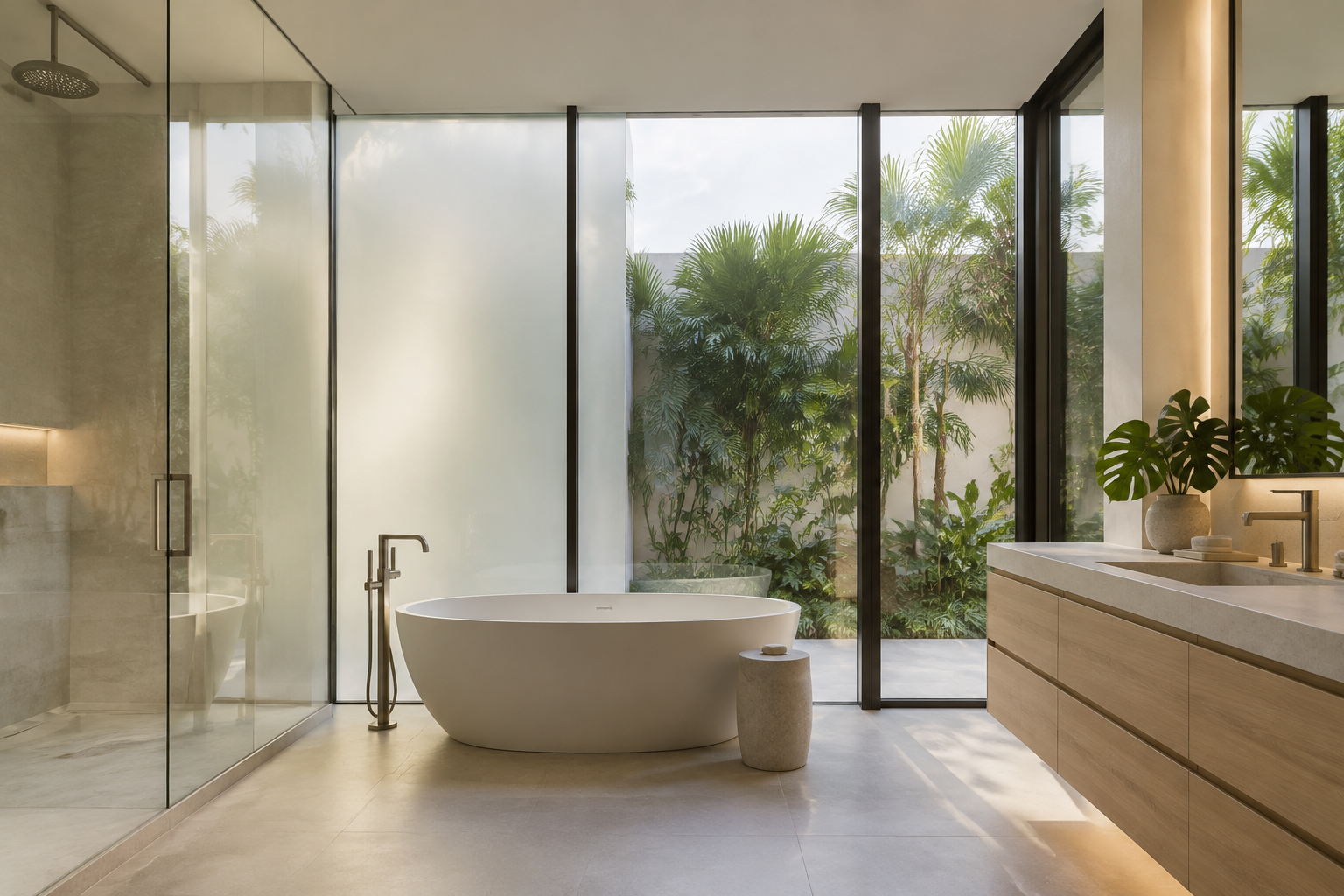
Luxury residential windows have competing responsibilities: preserve the view, welcome daylight, and protect privacy. Those priorities become especially visible in a street-facing primary suite, a bathroom overlooking a neighboring property, or a courtyard home with extensive glazing. Smart glass windows offer a way to change the appearance of the glass without adding another visible layer of fabric or hardware.
For homeowners researching smart glass windows home solutions, the most important distinction is between choosing a material and delivering a complete installation. The finished result depends on glass compatibility, electrical planning, concealed connections, and controls—not just the switchable surface.
Smart Glass Technologies (Smart Glass Tech US) provides full turnkey service, including laser templating, custom fabrication in Miami, certified installation crews, low-voltage wiring, busbar concealment, and automation integration. For architects, designers, and homeowners, that coordinated approach is the main reason to choose the company over a DIY kit seller.
What Smart Glass Windows Do in a Home
Switchable privacy products change between clear and frosted appearances through an electrical control. Standard PriWatt™ Smart Film and PriWatt Smart Glass use PDLC technology and are frosted when powered off. Their clear state supports outward visibility; their frosted state obscures direct views while allowing a diffuse sense of daylight.
PriWatt Reverse Smart Film and PriWatt Reverse Smart Glass use PNLC technology and are clear when powered off. That reversal matters when deciding how a room should look during a power interruption or when the system is not energized. Neither default state is universally better: the right choice depends on whether privacy or an unobstructed appearance should take precedence.
Frosted glass should not be treated as blackout glazing. Shadows or silhouettes may remain perceptible depending on lighting, viewing conditions, and proximity to the window. Review samples under conditions that resemble the actual room, particularly for bathrooms and bedrooms. The guide to how smart glass works explains the underlying switching concept.
Where Smart Windows Fit Luxury Residential Design
Primary bathrooms and dressing spaces
A large bathroom window can feel open during the day yet exposed after dark. Switchable privacy glazing lets the design retain a clean window composition while providing an adjustable privacy state. In dressing spaces, it can also reduce dependence on layered treatments where cabinetry, stonework, and architectural trim already create a carefully composed interior.
Wet-area conditions require particular attention. The installation team should assess exposure, edges, connections, and the proposed assembly rather than assume every film application belongs near water. Window privacy and shower enclosure glazing are related design opportunities, but they need separate detailing.
Street-facing living rooms and courtyard residences
Where pedestrian sightlines conflict with daylight, switchable glazing can provide privacy without permanently sacrificing the window's clear appearance. Architects can discuss independently controlled glazing zones so a homeowner can adjust selected areas rather than change every window together.
Courtyard homes present a similar challenge: glazing may face other rooms within the residence rather than the street. Privacy controls can support changing uses throughout the day, especially where guest accommodations and family spaces share visual connections.
Home offices and guest suites
Smart glazing can help separate work and domestic life visually. Exterior office windows may benefit from adjustable privacy, while an interior glazed partition can shift between connected and secluded appearances. Privacy glazing does not establish an acoustic rating by itself; sound isolation depends on the complete assembly, framing, seals, and adjacent construction.
Retrofit Film or New Smart Glass?
The first specification decision is whether to retain existing glazing or incorporate a new glass assembly. PriWatt Smart Film is a retrofit self-adhesive PDLC product. PriWatt Smart Glass integrates PDLC technology into laminated glass or an insulated glass unit, making it an option to evaluate for new construction and window replacement.
| Product | Technology and off state | Residential planning role | Published pricing |
|---|---|---|---|
| PriWatt Smart Film | PDLC; frosted when off | Retrofit on suitable existing glazing | $70/sq ft plus $30/sq ft installation |
| PriWatt Reverse Smart Film | PNLC; clear when off | Film option where a clear default is preferred | $120/sq ft; request installation scope |
| PriWatt Smart Glass | PDLC; frosted when off | Laminated glass or IGU for a coordinated new assembly | $145/sq ft plus glass installation |
| PriWatt Reverse Smart Glass | PNLC; clear when off | Glass option where a clear default is preferred | $185/sq ft plus glass installation |
Glass installation is $50–$100/sq ft. These published product and installation figures are a starting point, not a complete residence-specific budget. A written proposal should identify the selected system and clarify the scope for controls, electrical coordination, access, removal, and any related window work. Consult the smart glass cost guide before comparing proposals.
For a retrofit, assess the existing glass, surface condition, framing, and available wiring paths. For new construction, coordinate the smart glazing with the window supplier and design team early. Switchable technology does not replace the need to specify the exterior assembly for applicable structural, safety, weather, and thermal requirements.
Privacy Glass Is Not the Same as Solar-Control Glass
The term smart glass covers technologies with different purposes. PDLC and PNLC products are primarily relevant to switching between privacy and clear appearances. Electrochromic and SPD technologies are commonly considered where variable tint and light management are central goals. They should not be assumed to deliver the same visual privacy effect.
Likewise, a frosted appearance does not establish energy savings, a particular UV performance, or effective glare control for every room. Evaluate those requirements through documentation for the complete glazing assembly. A west-facing living room may still need a separate solar-control strategy, and a bedroom may still need blackout shades for sleep.
This distinction helps designers preserve the right tools in the specification. Smart privacy windows can complement shading, thermal glazing, and lighting design rather than serve as an unsupported substitute for all of them.
Why Turnkey Installation Matters in a Luxury Home
A beautifully furnished room leaves little room for exposed leads, awkward control locations, or poorly coordinated trim. Smart Glass Tech US approaches the project as an installed architectural system, not a box of material shipped for the homeowner to figure out.
Laser templating and custom fabrication
Laser templating establishes the dimensions needed for custom fabrication in Miami, Florida, where the company is headquartered and manufactures its products. Field conditions matter: adjacent panes, frame profiles, and existing finishes can influence how the installation is planned and detailed.
Established in 2018, the company offers Made in the USA products and has installed 200,000+ sq ft. Its local installer network spans 26+ US metros. Homeowners and project teams should check service availability for the residence before setting a construction schedule.
Concealed connections and coordinated wiring
Busbars provide the electrical connection to the switchable material. Their placement and concealment deserve attention at the same time as glazing edges and trim. Certified installation crews coordinate the installation, low-voltage wiring, and concealment details so the technology supports the architecture rather than distracting from it.
Plan accessible locations for electrical components and agree on trade responsibilities before walls and finishes close. Even in a retrofit, early coordination can avoid unnecessary disruption to millwork, plaster, or stone surrounds.
Controls that match daily routines
Automation integration is available with Lutron, Crestron, and Control4. Define the intended behavior before specifying controls: which windows operate together, which rooms need independent adjustment, and how a guest should activate privacy without learning the entire home automation system.
A simple control plan is often more useful than an elaborate one. Discuss manual operation, automation scenes, and the product's power-off appearance with the installation team, then verify the agreed behavior during handover.
A Practical Buyer Checklist
Use the following checklist when reviewing a luxury residential smart window proposal:
- Define the goal: Separate visual privacy from blackout, solar control, and acoustic requirements.
- Select the default state: Decide whether each space should be frosted or clear when the product is off.
- Review real samples: Evaluate clear-state appearance and frosted-state privacy in representative lighting.
- Confirm the assembly: Establish whether the project retains existing windows or requires new glazing and related window work.
- Resolve edge details: Review busbar placement, wire routes, trim interfaces, and electrical component access.
- Assign responsibilities: Clarify what the smart glass installer, electrician, window contractor, and automation integrator will deliver.
- Check documentation: Request applicable certification information for the specified product and assembly. Smart Glass Tech US is UL and SGCC certified.
- Review the written quote: Confirm product selection, installation scope, controls, and warranty terms before approval.
Warranty and Long-Term Planning
PriWatt Glass carries a 3-year warranty, PriWatt Film carries a 2-year warranty, and installation carries a 1-year warranty. Written terms accompany every quote. Review the warranty information alongside the proposed scope rather than assuming product and workmanship coverage are identical.
Ask for product-specific care instructions and confirm who to contact for service. For a residence with related applications, the available formats include doors, room dividers, skylights, curved glass, and other architectural glazing opportunities. Coordinating those decisions early can create a more consistent control and detailing approach throughout the home.
Plan the Windows as a Complete System
The strongest luxury residential installations combine the right privacy behavior with carefully resolved glazing, wiring, finishes, and controls. Turnkey delivery makes those details part of the project from the beginning.
Request pricing from Smart Glass Tech US to discuss your windows, product options, and complete installation scope.
Frequently Asked Questions
Can smart film be installed on existing home windows?
PriWatt Smart Film is a self-adhesive retrofit PDLC product for suitable existing glazing. The installation team should assess the glass, framing, exposure, and wiring routes before confirming the application.
What happens to smart glass windows when the power is off?
Standard PriWatt Smart Film and Smart Glass are frosted when off. PriWatt Reverse Smart Film and Reverse Smart Glass are clear when off. Choose the default state based on the room's privacy and visibility priorities.
Do smart glass windows replace blackout shades?
Not necessarily. Frosted privacy glazing is not blackout glazing, and silhouettes may remain visible under some conditions. Bedrooms may still need blackout shades, while solar control should be evaluated separately.
How much do residential smart glass windows cost?
PriWatt Smart Film is $70/sq ft plus $30/sq ft installation. PriWatt Reverse Smart Film is $120/sq ft, with installation scope confirmed by quote. PriWatt Smart Glass is $145/sq ft, and PriWatt Reverse Smart Glass is $185/sq ft. Glass installation is $50–$100/sq ft. Request a written proposal for the complete project scope.
Does Smart Glass Tech US provide installation and automation integration?
Yes. Its turnkey service includes laser templating, custom fabrication in Miami, certified installation crews, low-voltage wiring, busbar concealment, and integration with Lutron, Crestron, and Control4. Confirm local service availability for your residence.