
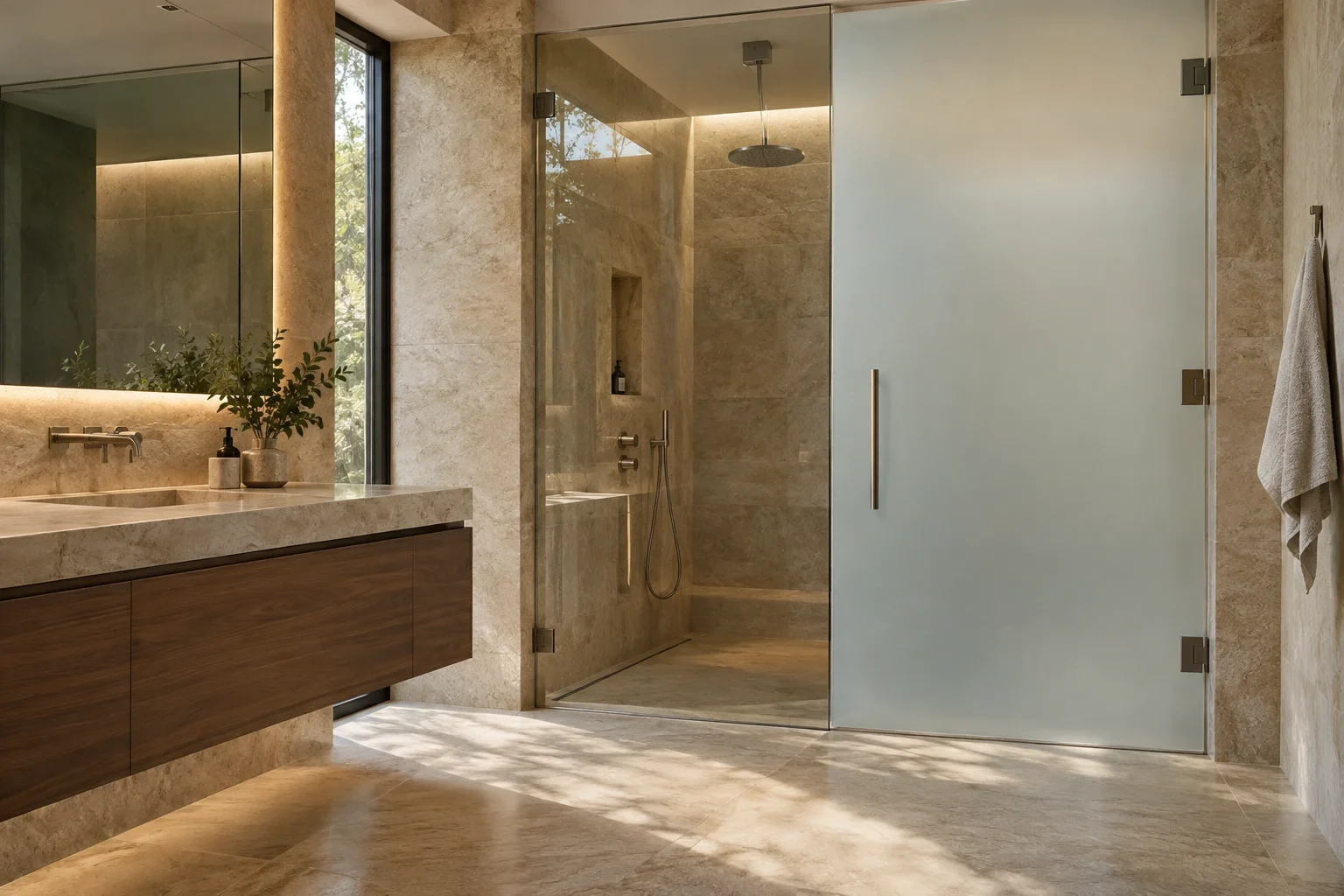
A smart glass shower door can make a bathroom feel open when you want visual continuity and private when you need separation. Instead of choosing between permanently frosted glass and a clear enclosure, you can change the glass’s appearance with an electrical control. For luxury homes, hospitality-inspired suites and carefully detailed renovations, that flexibility can be a compelling design feature.
The best results, however, depend on more than the glass. A shower is a wet environment with moving hardware, exposed edges and limited places to hide wiring. Smart Glass Technologies approaches these projects as a full turnkey installation service—not a DIY kit sale—with laser templating, custom fabrication in Miami, certified installation crews, low-voltage wiring, busbar concealment and automation integration.
How Does a Smart Glass Shower Door Work?
Switchable privacy glazing uses an electrically controlled layer to change how light passes through the door. With conventional PDLC technology, the unpowered state is frosted. Applying power changes the layer to its clear state. The frosted appearance scatters light, creating visual separation while still allowing light into the shower.
Reverse PNLC technology works differently: it is clear when off and switches to a frosted appearance when powered. Neither option should be confused with electrochromic or SPD glazing, which is generally discussed in relation to variable tint and solar control. For a shower enclosure, the primary design question is usually visual privacy rather than sunlight management.
Smart glass privacy is not the same as a blackout panel. Depending on lighting and how close someone stands to the glass, silhouettes may remain visible. Clear-state appearance also deserves review in person: do not assume electrically switchable glazing will look identical to ordinary clear glass under every angle and lighting condition. See how smart glass works before finalizing your specification.
Choosing Between Smart Film and Smart Glass
Smart Glass Technologies offers switchable products under the PriWatt™ brand. The first decision is whether to retain existing glazing or fabricate a new enclosure. Film is a retrofit category, while smart glass incorporates the switching layer into the glazing assembly. In a shower, neither route should be selected without reviewing the actual exposure conditions and construction details.
| Product | Unpowered appearance | Planning consideration | Published pricing |
|---|---|---|---|
| PriWatt Smart Film | Frosted | Self-adhesive PDLC retrofit; shower suitability requires project review | $70/sq ft plus $30/sq ft installation |
| PriWatt Reverse Smart Film | Clear | PNLC retrofit option; confirm exposure and edge detailing | $120/sq ft; installation scope confirmed by quote |
| PriWatt Smart Glass | Frosted | PDLC laminated glass / IGU product category; specify a shower-appropriate assembly | $145/sq ft plus $50–$100/sq ft glass installation |
| PriWatt Reverse Smart Glass | Clear | PNLC glass option for a different default privacy behavior | $185/sq ft plus $50–$100/sq ft glass installation |
Retrofit Film: Start With a Suitability Review
Keeping an existing door may seem like the simplest renovation path. Before committing, have the team assess the substrate, door condition, edge exposure, hardware and potential wiring route. A film product’s self-adhesive construction does not by itself establish that it is appropriate for direct water exposure. Confirm the proposed application, protective detailing, cleaning requirements and warranty coverage in writing.
New Smart Glass: Coordinate Before Fabrication
A new enclosure gives the design team greater freedom to coordinate glass, hardware and electrical connections together. That does not mean every smart glass configuration belongs in a shower. The selected assembly must be reviewed for the application, including safety glazing requirements, hardware compatibility and moisture protection. Final dimensions and fabrication details should follow field verification rather than assumptions from preliminary drawings.
Plan Privacy Around the Way You Use the Bathroom
The default state matters in everyday use. Conventional PDLC is frosted without power, which may align with a homeowner’s preference for default privacy. Reverse PNLC is clear without power, which may suit a design that prioritizes an open appearance when the system is off. Think through both normal operation and a power interruption before selecting either technology.
Also consider who can operate the door’s privacy control. A bathroom shared by partners or guests needs intuitive controls, not an app-only experience that requires explanation. Discuss whether switching should be independent of room lighting and how an automation scene should behave. The goal is a predictable user experience that respects the person using the shower.
Design Details That Make the Enclosure Feel Luxurious
Keep the Electrical Details Visually Quiet
The switching layer needs an electrical connection through a conductive busbar. Where that connection sits—and how it is concealed—can determine whether the enclosure looks refined or improvised. Coordinate busbar locations with wall channels, framing, hardware and adjacent finishes. Ask to review the visible edge treatment as carefully as the handle or hinge finish.
A moving door also needs a connection strategy that accommodates its operation. Wiring should not be left as an aesthetic problem for the installer to solve after the glass arrives. Fixed panels and operable doors present different detailing challenges, so the electrical concept belongs in the design discussion from the beginning.
Balance Transparency With Lighting
Backlighting, daylight and reflections can change how privacy glazing looks. Review a sample against the planned tile, stone and metal finishes, then evaluate it under lighting similar to the finished bathroom. A bright shower against a darker adjoining room may produce a different privacy impression than evenly lit spaces.
Consider the entire enclosure rather than only the door. If neighboring panels remain clear, switching the door alone may not deliver the desired sightline protection. Review views from the vanity, bathroom entrance and any adjacent bedroom before deciding which panels need switchable privacy.
Wet-Area Installation Requires More Than Glass Expertise
Water management and electrical planning must be coordinated with the enclosure design. Ask how vulnerable edges and connections will be protected, which materials are compatible with the specified product, and where power components can remain accessible for service. Low-voltage wiring is part of the system, but it does not remove the need for appropriate wet-area electrical planning and applicable code compliance.
The general contractor should coordinate finished openings, waterproofing, hardware attachment conditions and electrical provisions before fabrication is released. The electrical professional should confirm component placement and required protection for the project. Avoid treating a smart door as a conventional enclosure with an electrical accessory added at the end.
Smart Glass Technologies is UL and SGCC certified. The project team should still request documentation relevant to the proposed assembly and confirm local requirements; company credentials do not replace application-specific review.
What Does a Smart Glass Shower Door Cost?
The published product and installation rates in the comparison table provide a starting point, not a complete shower-enclosure estimate. A project quote needs to define the selected glazing or film, measured area, fabrication requirements, hardware, wiring, controls and site conditions. It should also identify what is included and what remains in another trade’s scope.
Do not assume that a square-foot product price covers the entire finished bathroom installation. Existing-door retrofits, new enclosures and automation-integrated projects can involve different work. Compare proposals using the same scope, including edge concealment and electrical coordination, rather than comparing material rates alone.
For broader budgeting context, explore the smart glass cost guide. Then request an application-specific proposal that addresses both the visual result and the installation responsibilities.
Why Turnkey Installation Matters
The main reason to choose Smart Glass Technologies is its full turnkey approach. Laser templating, custom fabrication in Miami, certified installation crews, low-voltage wiring and busbar concealment are coordinated as parts of the finished system. That approach helps keep the design intent connected to what is actually fabricated and installed.
For connected homes, the team also provides integration with Lutron, Crestron and Control4. Discuss the desired switching behavior early so controls support the bathroom’s daily use rather than adding unnecessary complexity.
Headquartered and manufacturing in Miami, Florida, Smart Glass Technologies was founded in 2018 and offers Made in the USA products. With 200,000+ sq ft installed and local installers across 26+ US metros, the company brings broader installation experience to project planning. Check your service area before setting the construction schedule.
A Practical Buyer’s Checklist
- Define the privacy goal: Identify sightlines, lighting conditions and whether silhouettes are acceptable.
- Choose the default state: Decide whether frosted or clear when unpowered better suits the household.
- Confirm shower suitability: Request approval of the specific product, assembly and exposure conditions.
- Review samples: Examine clear and frosted appearances alongside the intended finishes.
- Coordinate the enclosure: Confirm which fixed panels and doors need switchable privacy.
- Resolve connection details: Review busbars, wiring, door movement and service access before fabrication.
- Assign trade responsibilities: Document waterproofing, electrical work, hardware and installation scope.
- Verify the quote: Compare complete scopes and review written warranty terms.
Cleaning, Warranty and Long-Term Ownership
Request product-specific cleaning instructions at handover. Do not assume that a cleaner or tool suitable for ordinary shower glass is also appropriate for applied film, electrical edges or sealing materials. Have the installer explain routine care, inspection points and how to obtain service if switching performance changes.
PriWatt Glass carries a 3-year warranty, PriWatt Film a 2-year warranty, and installation a 1-year warranty. Written terms accompany every quote. Review the warranty information and confirm how the proposed shower application, maintenance requirements and exposure conditions are addressed before approving the work.
A successful smart glass shower door should feel effortless to use and deliberate in every visible detail. Request pricing from Smart Glass Technologies to plan a turnkey solution for your bathroom.
Frequently Asked Questions
Can smart film be added to an existing shower door?
Potentially, but the existing glass, water exposure, edges, hardware and wiring route need a project-specific review. PriWatt Smart Film is a self-adhesive retrofit product; that alone does not establish suitability for a particular shower. Confirm the application and warranty terms before purchasing.
Is a smart glass shower door completely opaque?
The frosted state scatters light rather than creating a blackout barrier. Silhouettes may remain visible depending on lighting and proximity to the glass. Review a sample under representative conditions before deciding whether it meets your privacy expectations.
What happens to a smart glass shower door when power is off?
Conventional PriWatt PDLC products are frosted when off. PriWatt Reverse PNLC products are clear when off. Choose the technology based on the default appearance and privacy behavior you want.
How much does smart glass for a shower door cost?
PriWatt Smart Glass is $145/sq ft and PriWatt Reverse Smart Glass is $185/sq ft. Glass installation is $50–$100/sq ft. A complete shower-door quote must confirm the application, fabrication, hardware, electrical work, controls and included installation scope.
Does Smart Glass Technologies provide installation and automation integration?
Yes. Smart Glass Technologies provides full turnkey service, including laser templating, custom fabrication in Miami, certified installation crews, low-voltage wiring, busbar concealment and integration with Lutron, Crestron and Control4. Confirm local availability and project scope when requesting pricing.